HealBat
Self-healing by Design: a New Pathway Towards Sustainable Batteries
About the project
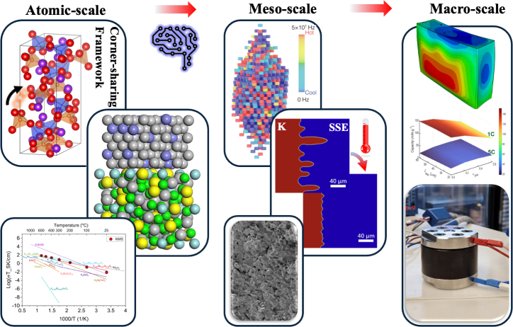
Batteries degrade, but what if they could recover? The HealBat project explores a fundamentally new approach to battery design: instead of simply slowing degradation, we engineer interfaces that actively heal themselves during normal operation. Working at the intersection of computational modelling and experimental materials science, we are developing potassium–sulfur solid-state batteries built from earth-abundant elements. A tightly integrated modelling-experimental team uses AI-enhanced multiscale simulations to predict self-healing mechanisms, which are then validated through advanced synthesis and electrochemical testing. Operational heat already presents in a working battery is harnessed as the trigger for interface recovery, turning an unavoidable by-product into a functional asset.
Type of project
The project is supported by Independent Research Fund Denmark - DFF | Ad hoc-udvalg for Grøn forskning (2025)