Low-temperature electrolysis
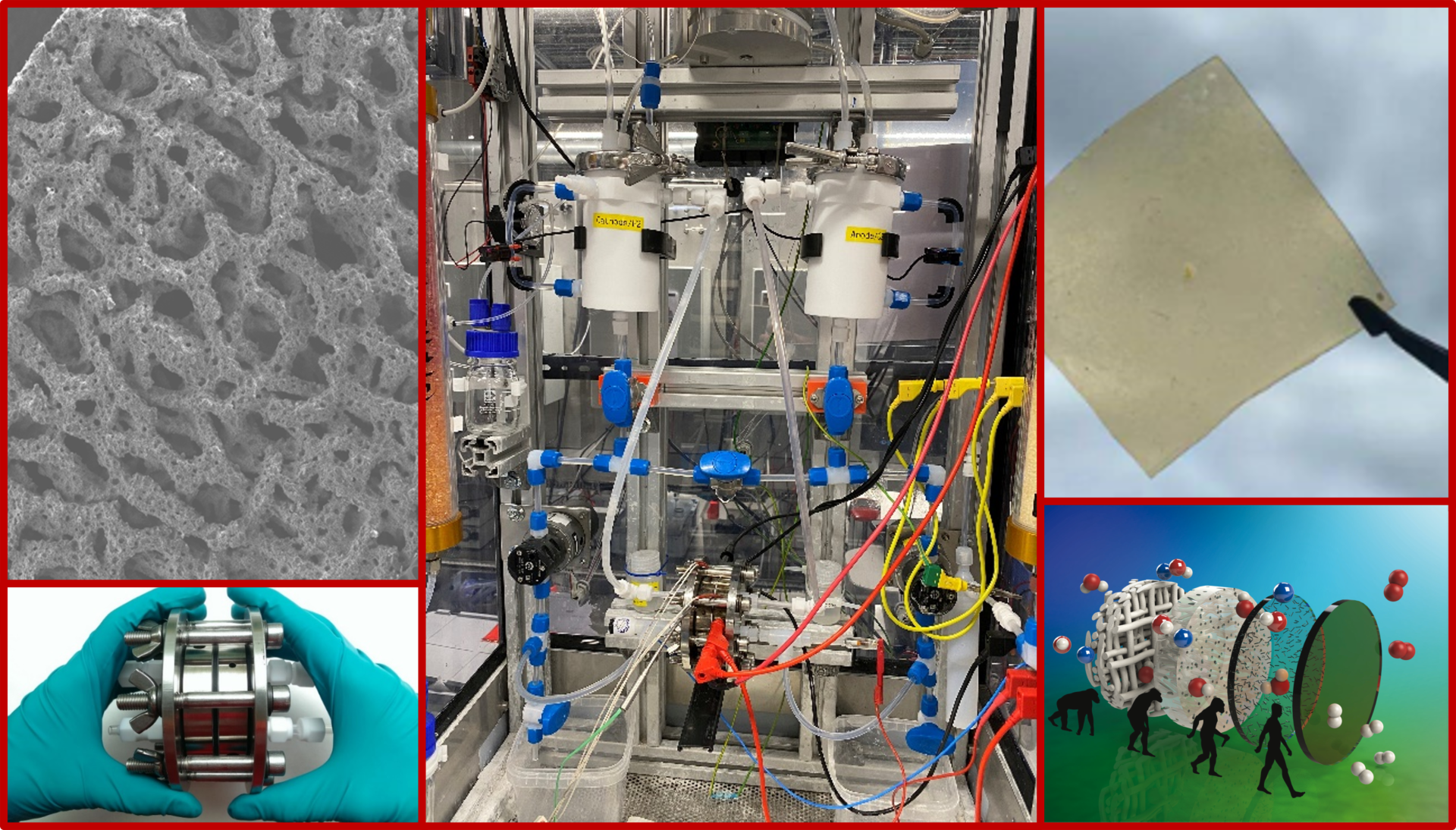
Electrolysis is the technology for conversion of electrical energy into fuels and chemicals. It works by splitting water into its constituents, hydrogen and oxygen by means of electrical energy. It is thus the heart of the concept referred to as power-to-X, in which power is electrical power, and X can be anything from hydrogen to sustainable aviation fuel, ammonia and raw materials for the chemical industry. Electrolysis is an indispensable element in the green transition.
At DTU Energy, electrolysis is a very active area of research and education. We distinguish into to high- and low temperature electrolyzer technologies. Their roles in the value chain are similar, but technically they differ significantly. Low temperature electrolyzers are most mature and dominating the market as of today. We are particularly interested in the alkaline technologies. They comprise the traditional large-scales low-cost systems as well as advanced and compact next generation units. A common feature for the alkaline technology is the independence of expensive or strategic raw materials.
Research and development at DTU Energy
Our approach to research and development is materials science, electrochemistry and component development. We work experimentally as well as via modelling and simulation. Most projects are carried out in collaboration with industry and involve students.
Main electrolyzer technologies targeted
- Alkaline electrolysis
- AEM electrolysis
- CO2 electrolysis
- Solid phosphate electrolysis
Component and materials development
- Polymers and ion-conducting membranes
- Porous separator membranes
- Catalysts
- Advanced electrodes
Test and characterization
- Sigle cell performance testing
- Durability
- Gas crossover
- Electrochemical characterization
- Spectroscopy and electron microscopy
Contact
Jens Oluf Jensen Professor Department of Energy Conversion and Storage Phone: +45 45252314 jojen@dtu.dk